Diagrams
Overview
Visual diagrams illustrating the internal architecture and runtime behavior of CWORLDUMODULE.
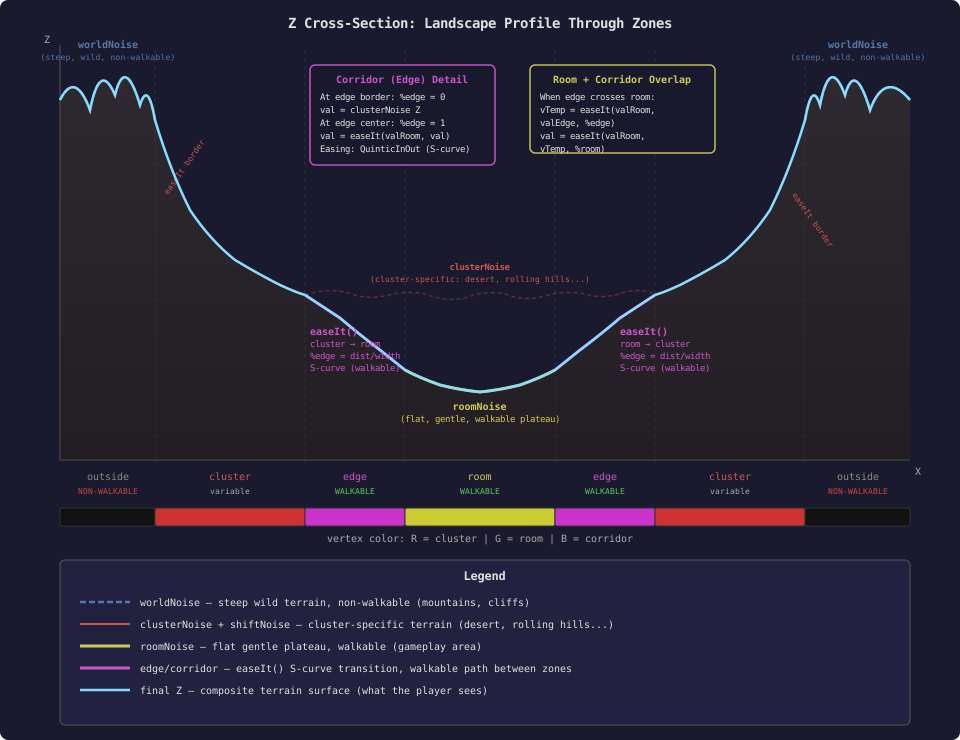
1. Z Cross-Section: Noise Influence Across Zones
Side view (cross-section) showing how the final Z height is computed when traversing horizontally through the different spatial zones: outside → cluster → edge → room → edge → cluster → outside. Each zone blends different noise layers via easeIt(), and vertex colors change in parallel to encode spatial context for the material.
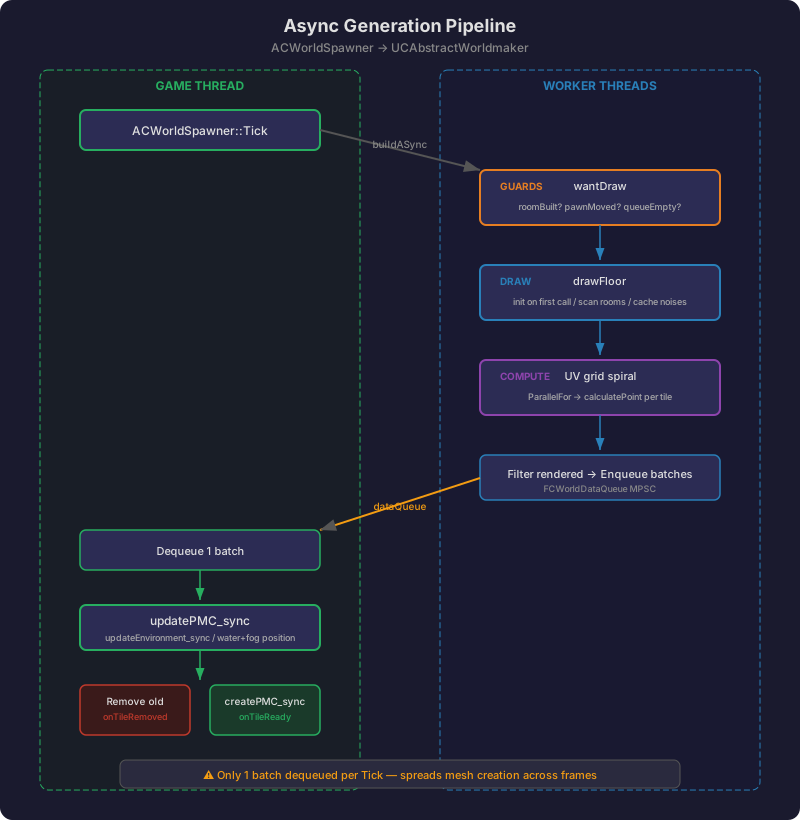
2. Async Generation Pipeline
How ACWorldSpawner drives tile generation across game thread and worker threads.
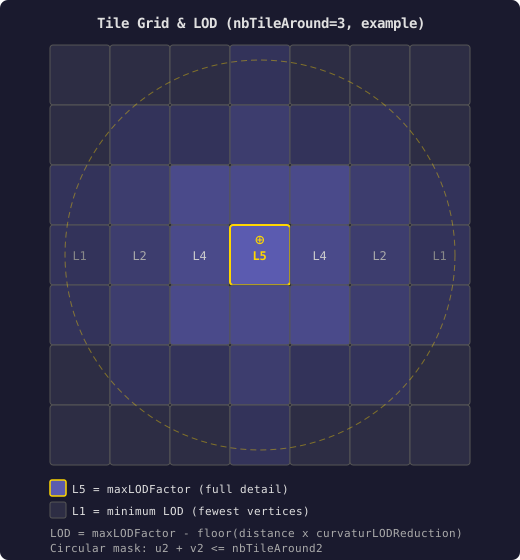
3. Tile Grid & LOD
How tiles are arranged around the pawn with distance-based LOD reduction.
The tile grid is a circular area of radius nbTileAround centered on the pawn UV index. Each tile’s LOD (level of detail) decreases with distance from the pawn, controlled by curvaturLODReduction. The number of vertices per tile side is nbMinPointPerSide × LOD.
4. Noise Blending & Z Calculation
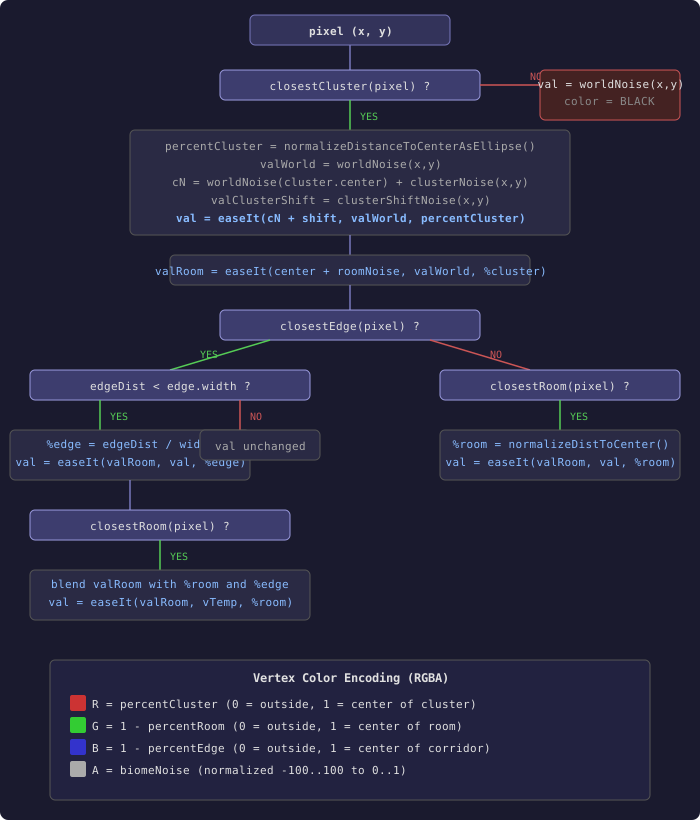
How innerZCalculate blends multiple noise layers to compute the final Z height and vertex color at any (x, y) position.
5. Class Architecture
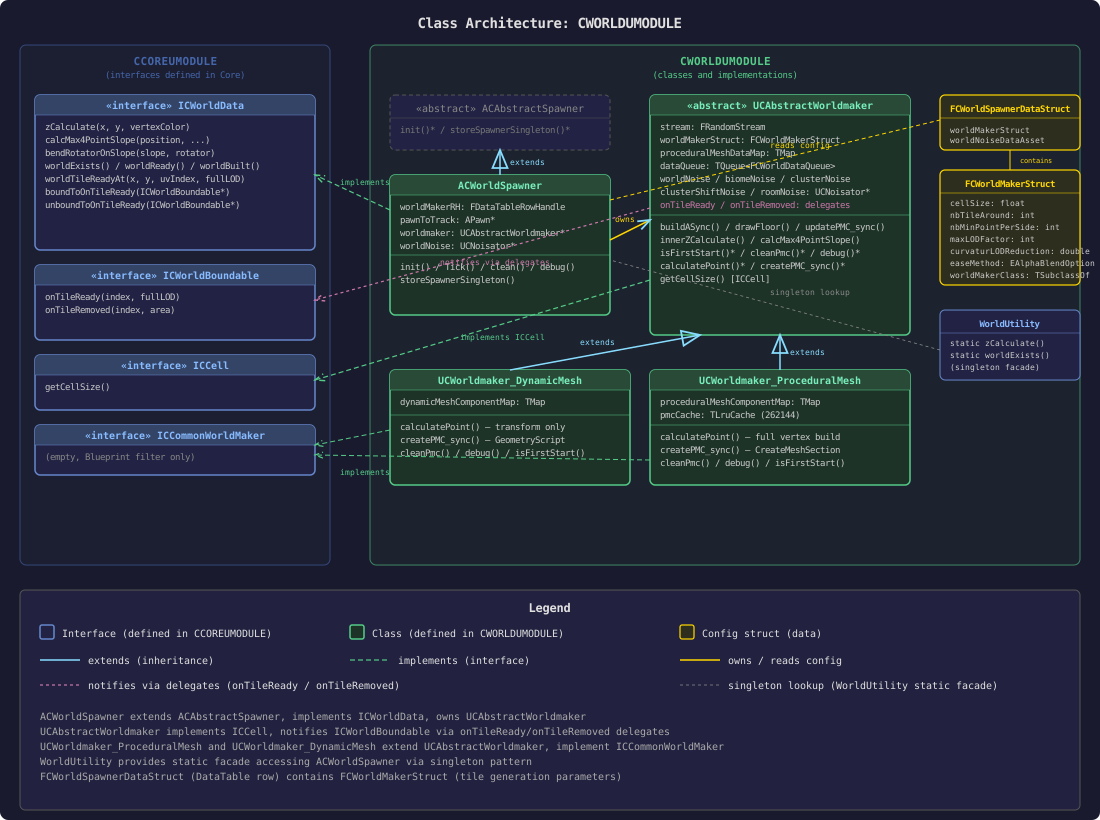
Class hierarchy, ownership and interface relationships within CWORLDUMODULE. Interfaces are defined in CCOREUMODULE, classes and implementations in CWORLDUMODULE. WorldUtility provides a static singleton facade for cross-module access.
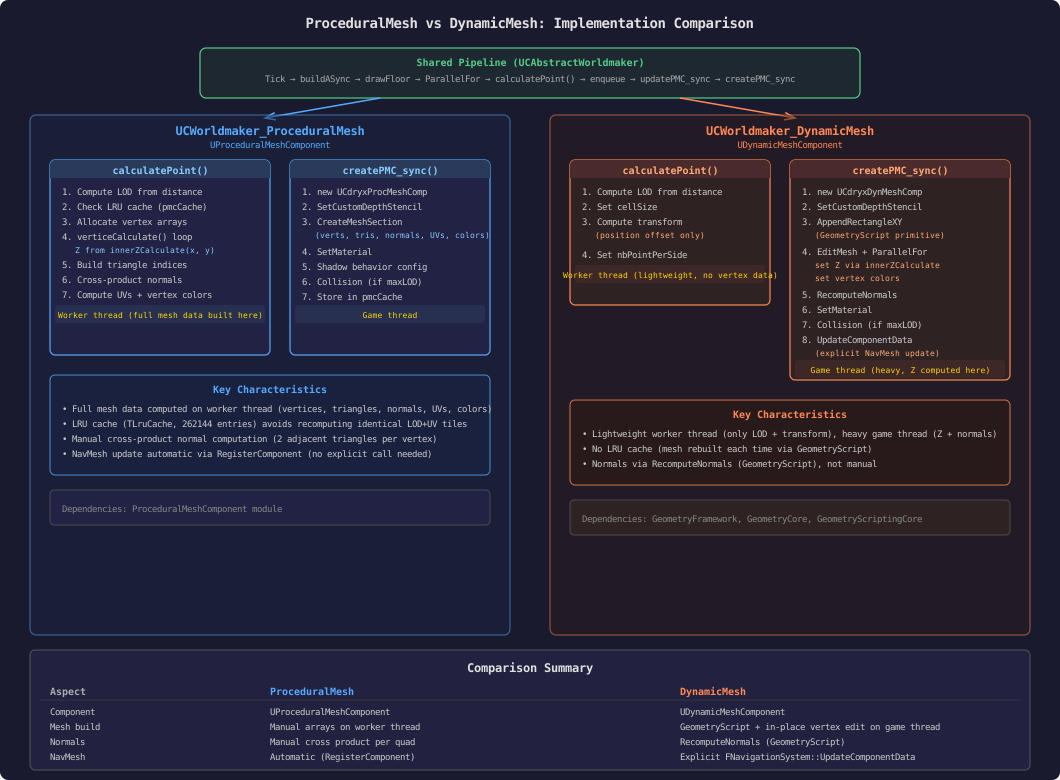
6. ProceduralMesh vs DynamicMesh Comparison
Side-by-side view of the two worldmaker implementations showing how each handles calculatePoint and createPMC_sync, with the key difference being where Z computation happens (worker thread vs game thread).